Case Study: Hathaway’s Journey to Finding Her Voice, How a Bilingual Preschooler Gained Confidence Through Speech, Literacy, and Play
Meet Hathaway
Hathaway is a bright, active, and independent 4-year-old growing up in a bilingual home. She spoke only Mandarin until age 2.5, when she began preschool and was immersed in English. Although she was curious and eager to learn, her mom grew concerned that Hathaway’s speech was difficult to understand—especially when she tried to express full thoughts. Though Hathaway could recognize letters and ask questions, she struggled to clearly describe events or tell simple stories. Her mom and teachers worried that these expressive language challenges might affect her ability to make friends or fully engage in class.
A Thoughtful Start
When her mom voiced concerns, Dr. Megan conducted a holistic assessment of Hathaway’s speech, language, and early literacy skills—in both English and Mandarin. This gave us a clear picture of her strengths and needs and helped us create a plan that was developmentally appropriate and grounded in research.
The Challenges We Noticed
When we first began working with Hathaway, she:
- Mostly used unclear, single English words
- Had difficulty with l, r, and s sounds
- Often left off final consonants
- Couldn’t describe a single idea or tell a short story
- Was understood less than 50% of the time by unfamiliar adults
- Frequently became frustrated when others couldn’t follow her
“Hathaway knew what she wanted to say—but couldn’t get it out clearly enough. That disconnection caused real frustration.”
Early Strengths & Hidden Potential
Despite her speech difficulties, Hathaway showed signs of strong language and literacy development:
- Recognized several letters
- Showed interest in books and asked thoughtful questions
- Demonstrated strong comprehension in both English and Mandarin
Her expressive language challenges, however, raised red flags. Research shows that speech delays can affect early reading and social-emotional development. That’s why we used a targeted, evidence-based approach that blended Dr. Megan’s clinical expertise with joyful, culturally responsive strategies.
A Personalized, Play-Based Plan
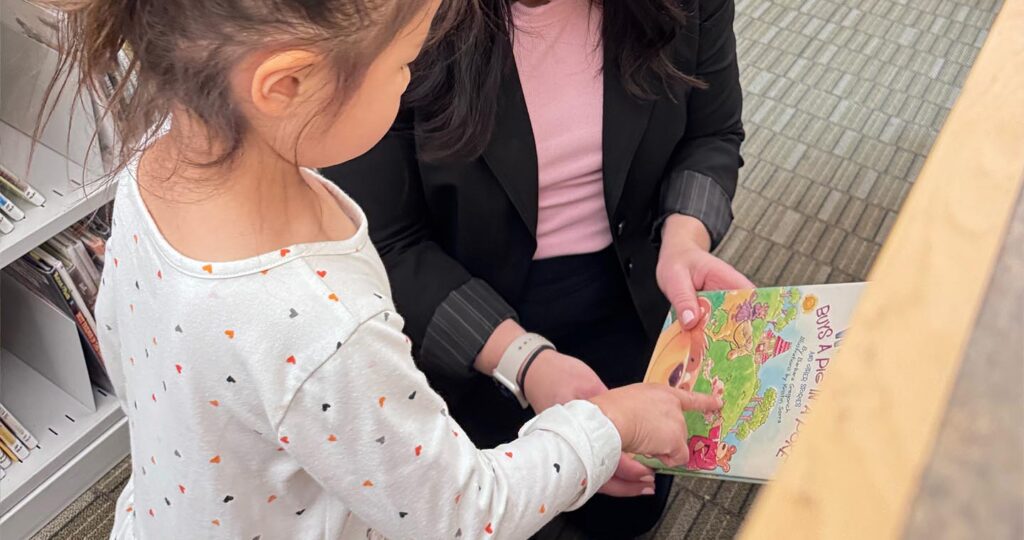
We designed a 10-session plan tailored to Hathaway’s needs as a bilingual learner. Each session included:
- Reading age-appropriate, engaging children’s books
- Discussing story events to build longer sentences
- Practicing key sounds in both Mandarin and English
- Sorting pictures by initial sounds
- Learning how to physically produce difficult sounds (like l, r, and s)
By focusing on contrastive pronunciation and maximally different sounds, we supported her clarity across both languages.
What Changed in Just 10 Sessions?
Clearer Speech
- Progressed from unclear single words to 3–4 word sentences like “The girl is going to sleep”
- Can now produce 12 initial consonant sounds accurately
- Speaks with greater confidence and fewer omissions
Improved Literacy Skills
- Matches first sounds and identifies rhyming words
- Sorts words by beginning sounds
- Shows stronger connections between letters and sounds—key for early reading
Emotional and Social Growth
- Engages more with peers
- Uses her voice playfully and confidently
- Laughs, teases, and enjoys learning—making sessions full of joy and progress
A Mother’s Perspective
“As Hathaway’s mom, I’ve always understood her. But hearing she was struggling in class—unable to make friends and express herself—was truly heartbreaking.
She’s so bright and curious, and it was painful to see her joy dimmed by frustration. I worried that being bilingual might be holding her back.
But the changes I’ve seen have truly surprised me—she’s now more confident, playful, and eager to speak up. It’s like she’s finally being heard, and that’s been the most incredible gift.”
Final Reflection
Hathaway’s story reminds us: being bilingual is a strength, not a setback. With the right support, every child can find their voice—and thrive.